
Part One of Family Eldercare’s Series on Navigating Racial Trauma
Trauma is not an event. Trauma is an emotional response to a threatening or disturbing experience. We can have many of these experiences throughout the course of our lives. Until recently, trauma was only recognized in veterans. Then researchers realized that other experiences such as assault, witnessing severe injury or death, or surviving a natural disaster have a similar response to danger. Exposure to racism or repeated experiences of racism can also result in trauma.
Experiencing trauma after exposure to racism does not make you weak. It is a normal reaction to a real threat you are surviving. There is nothing wrong with you, and you are not imagining it. Trauma can be healed. You are resilient and worthy of restoration. That’s in you—even if you need support to reach it.
Events That Can Lead to Racial Trauma:
- Racial harassment and race-based violence.
- Discrimination and exclusion from opportunities based on race or ethnicity.
- Media coverage of cruelty and violence towards people who share your racial or ethnic identity.
- Exposure to racist comments and racist treatment in social or professional spaces (including microaggressions).
- Witnessing acts of racism that remind you of previous experiences.
Can White-bodied People Experience Racial Trauma?
While white people experience trauma in other forms, they do not experience racial trauma. Historically, white-bodied people have not experienced persistent persecution and violence at the hands of other racial groups. White supremacy has led to state sanctioned violence towards minorities, racist policies that target communities of color, and the ongoing genocide of Black, Indigenous, and People of Color around the world.
This does not mean that a white person cannot experience violence or threats from a non-white person, or that those experiences won’t lead to trauma. These experiences just aren’t identified as racial trauma, because racial trauma examines the power dynamics of society as a whole—not just an individual’s experience. Research demonstrates a stark difference in the impact of trauma between communities who hold more power and communities who hold less power.
Impacts of Racial Trauma
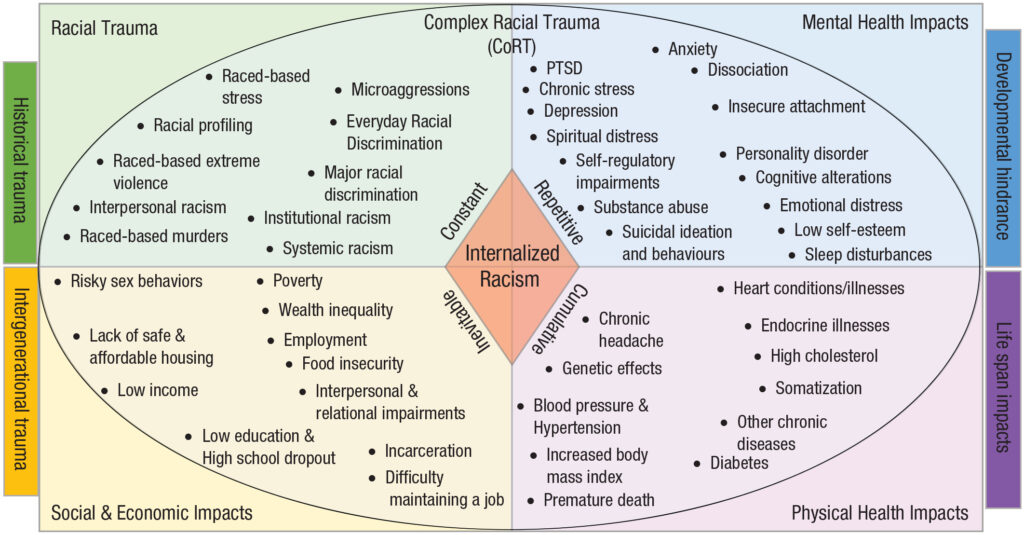
The following diagram conceptualizes race-based trauma and the consequences that go far beyond the experiences of “normal” trauma. To learn more about the ways racial trauma specifically impacts older Black adults, keep a lookout for next week’s post.
This post is part of the “Navigating Racial Trauma” blog series brought to you by Family Eldercare. Each Thursday in August, look for a new post exploring cultural issues affecting the Black community and how these issues impact Aging while Black. For additional information about Family Eldercare counseling services, please visit the In-Home Counseling webpage.